

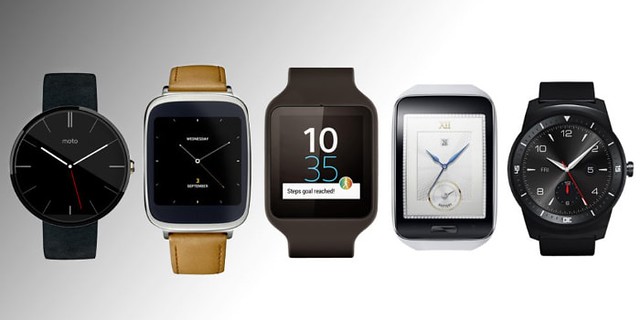
The smartwatch that will set you back around $500 is not dead. However, you don’t need one for Ironman training or performing clinical-grade ECGs off your wrist. According to Fortune Business Insights, the smartwatch market will increase from $38.53 billion in 2025 to $44.28 billion in 2026. One reason why the market keeps growing: the influx of affordable models ($200 and below) with premium sensor sets. The Apple Watch SE 3 is regularly available for $199. The Samsung Galaxy Watch 7 40mm model drops down to $174 on Amazon. The Amazfit Active 2 was launched for $99.99 with offline maps and 10 days of battery. Never have “budget” and “premium” been as blurry lines on the smartwatch market as they are today.
The top smartwatches under $200 in 2026 are Apple Watch SE 3 (best for iPhone users), the Samsung Galaxy Watch 7 (best for Android users), the Garmin Vivoactive 6 (best for athletes), and the Amazfit Active 2 (best value for the price under $130). The most critical factor in choosing a watch at this price is your smartphone OS – and if you are using an iPhone, the only reasonable recommendation is the Apple SE 3.
The best smartwatches under $200 in 2026 are fundamentally different devices compared to the ones you could buy for a similar price three years ago. The transition of features from high-end wearables to affordable ones happened faster in this category than in any other type of consumer electronics.
Why the Sub-$200 Smartwatch Market Finally Got Serious
The main reason is simple: according to Counterpoint Research’s data for 2026, Apple dominates the global market share, with 1 out of 4 smartwatches shipped in 2025 being made by Apple. At such volumes, producing high-performance chips like the S10 processor used in the SE 3 and Series 11 models comes down to pennies per chip. Same story applies to Samsung, Garmin, and Amazfit as well. Thanks to mass production, the cost of AMOLED screens, dual-band GPS modules, and other components has fallen significantly, making it affordable for brands to build $100 watches incorporating hardware costing $400 back in 2020.
According to DemandSage, over 92% of all smartwatch users depend on their devices to monitor and improve their health and fitness in 2026. That data impacts the product roadmap significantly. Instead of building a gadget with lots of cool sensors nobody would use on a daily basis, brands invest in developing high-performing sensors people actually track every day – heart rate, sleep stages, blood oxygen levels, steps – etc. The result is obvious: while health monitoring quality at $150 might not equal the one offered at $450, the difference is negligible for the metrics most users care about.
From my experience, I can say that the biggest mistake people make when picking a smartwatch under $200 is prioritizing unnecessary hardware features they will not use. Most of us care about heart rate, sleep monitoring, and steps. Continuous ECG monitoring, body composition scan, and skin temperature sensor that would cost you $100 more on top are not necessary. Amazfit Active 2 covers 90% of all use cases for the $99.
Apple Watch SE 3: The Right Answer for Every iPhone User
For iPhone owners, Apple Watch SE 3 is the clear winner among all sub-$200 watches – and there is no contest here. No Android-based wearable can deliver the experience of having all iPhone notifications (including iMessage) managed on one device. The Apple SE 3 offers pretty much the same experience of using Apple Watch, with a couple of minor features missing, for less money. When purchased through promotions at Amazon and Target stores, the model can drop to $199, so that is an excellent deal considering the hardware inside.
Apple Watch SE 3 has been powered by S10 chip developed by the brand. It is a dual-core processor that offers identical app load speed, watch face transitions, and workout GPS detection rates as the flagship model, Series 11. Features absent from Apple SE 3 are always-on screen, ECG support, blood oxygen measurement, and skin temperature control. However, if the main reasons why you’d use the watch are tracking workouts and checking messages, you won’t miss these features.
Last year, Apple sold 33.3 million Apple Watches. A considerable share of the number belongs to first-time buyers – which, in turn, is another reason why the company invested heavily in improving SE 3’s battery life. This time, the watch uses Ion-X glass that is four times more resistant to cracks than the earlier models. You can charge the watch from 0% to 80% in approximately 45 minutes – and this is not the end of good news: the battery lasts up to 18 hours, which means you’ll have to recharge it every day. Not a problem if you can do it overnight, with your phone. But if you like wearing your watch to sleep, the device will drain before morning.
For people who use their Apple Watches mainly to keep up with notifications and send iMessage replies, this is probably the best watch in the sub-$200 category. Otherwise, if battery life is a critical factor for you, go for the Garmin Vivoactive 6.
Samsung Galaxy Watch 7: The Android Choice With AI Health Features
Samsung Galaxy Watch 7 is the best model under $200 if you have a Samsung phone and want to use all the features your watch can offer. During promotional periods, this model is available for as little as $174.
This smartwatch uses a 3-nanometer Exynos W1000 processor along with Samsung’s proprietary BioActive sensor. The latter works with 13 LEDs, measuring heart rate, blood oxygen, and body composition of users from their wrist. With the new AI “Energy Score” function, Samsung can now generate a daily assessment of your overall well-being by analyzing your sleep quality, resting heart rate, and activity levels overnight. It sounds more like a gimmick than something helpful – until you realize how valuable this kind of data is and start noticing patterns in your everyday behavior.
The only caveat about this watch: battery life is somewhat limited. With typical usage, with the always-on screen turned on, the watch lasts only 24 hours. Workouts with active GPS tracking affect battery life negatively, so the device will need recharging every second night. For athletes training for marathons or triathlon races, it might become problematic: after a four-hour training session, there is no time left for your watch to survive a full day. However, commuting and office workers will hardly notice it.
Samsung Galaxy Watch 7 is perfect for productivity-oriented users willing to combine LTE capability, voice control with Google Assistant, and mobile payments in a single device. Amazfit Active 2 is a better option for price-sensitive customers ready to sacrifice Samsung features for $100 cheaper and 10-day battery life.
Garmin Vivoactive 6: Professional Fitness Tracking Without the Premium Price
The best smartwatch under $200 for athletes is the Garmin Vivoactive 6. Garmin’s expertise in the field of performance tracking and sports activities dates back decades, and it shows in the Vivoactive.
And then there’s battery life – the one place where the Vivoactive 6 distinguishes itself from every other device on this list. 11 days of smartwatch use, and five days on GPS. That translates to a week of your daily activities with no need to charge – a week’s worth of workouts, sleep, and notifications. For anyone who has ever panicked as the battery on a smartwatch drops during a long run, that is no small feat. It makes the device more usable.
According to Garmin’s 2025 Connect Data Report, strength training recorded by Garmin users rose 29% year-over-year, while over half of active Garmin users were averaging 8,000 steps per day or more. The Vivoactive 6 has sport modes for over 80 different sports, including Running Power analysis, Body Battery energy levels, and PacePro running pace adjustments. The majority of those modes will never be used by someone going to the gym casually, but for a serious runner, they offer useful data not found on any other Samsung or Apple smartwatch at this price.
What it lacks is the software ecosystem outside of pure fitness tracking. The Vivoactive 6 cannot run apps from Google Play. Notification support is serviceable but lacking in comparison to wearOS or watchOS. App selection via the Connect IQ store is limited compared to Wear OS or watchOS. The Vivoactive 6 is a fitness computer that shows your texts, not a smartwatch that helps you track your running.
To summarize: for runners and outdoor athletes, the Garmin Vivoactive 6 is the way to go with Coach training plans, PacePro, and 11 days of battery life. For Android users, the Samsung Galaxy Watch 7 offers the best smartwatch experience.
Amazfit Active 2: The Best Value Watch Under $130
The Amazfit Active 2 comes out on top among sub-$200 choices, no questions asked. Starting at just $99.99 for the basic model and $129.99 for the sapphire glass version, the Amazfit Active 2 includes features that most consumers do not even consider at this price range: offline navigation maps, a 1.32-inch AMOLED screen with up to 2,000 nit peak brightness, and 10 days of battery life.
The offline maps are what set the Amazfit Active 2 apart. Other budget smartwatches need a connected phone to perform navigation. The Amazfit Active 2 downloads offline maps of the region you specify, and then it can be used to navigate without a phone connection. Garmin makes you pay significantly more for that same feature. To have it at this price point is an outright bargain.
Zepp OS may lack polish compared to wearOS or watchOS, and its app ecosystem is quite shallow. Amazfit’s Coach AI builds training plans and calculates daily readiness ratings based on sleep and heart rate variation. The software is fine but nowhere as contextual as Samsung Galaxy AI or Garmin’s Body Battery system. You will find yourself wanting more after two weeks.
Amazfit managed to capture a stunning 14.1% of the outdoor sports smartwatch market share by early 2026 as reported by market analysis data. They are definitely considered in the fitness activity tracking segment.
FAQ: Best Smartwatches Under $200 in 2026
Which smartwatch under $200 works best with iPhone?
Only the Apple Watch SE 3 is recommended for iPhone users due to seamless integration with iOS. An Android-based smartwatch is unable to communicate with iMessage, Facetime, Apple Pay, or AirPods. If you need any of these functions, spending additional money for the SE 3 is worthwhile.
Can a sub-$200 smartwatch accurately track heart rate and sleep?
Yes, and the difference in measurement accuracy is negligible at present. DemandSage reports that 92% of all smartwatch users use the device for health and fitness tracking. The industry responded by lowering the optical HR sensor’s quality even further. According to step count tests published by Tom’s Guide, Garmin Vivoactive 6 beat the Samsung Galaxy Watch 7. All four smartwatches here have enough sleep staging capabilities to help with behavior patterns detection; however, their sensors should not be used for diagnosis.
Is the Amazfit Active 2 worth buying over a Samsung or Garmin?
For $130 or less budget and you are mainly interested in battery life, offline maps, and health tracking features, the Amazfit Active 2 beats every competitor on the market. However, it does fall behind competitors when it comes to smart device integration. If you don’t care much about message management or apps running on your wristband, it would make an excellent first choice at $100. Otherwise, you’d be better off with the Samsung.
Do any smartwatches under $200 have built-in GPS?
All four devices on this list are equipped with onboard GPS. The most accurate GPS is found in the Garmin Vivoactive 6, as the watch employs several satellite systems (GPS, GLONASS, GALILEO). The Samsung Galaxy Watch 7 includes dual-frequency L1 and L5 GPS. The Amazfit Active 2 has dual-band GPS, along with the unique ability to download and use offline maps for navigation.
What to Do in the Next 24 Hours
Check out CamelCamelCamel to get an alert for the desired price. $199 is the typical price of Apple Watch SE 3 and Samsung Galaxy Watch 7, both often hitting that price during Amazon promotions, Samsung.com sales, and Walmart clearance events. Setting up an alert takes 90 seconds and saves you significant money.
If you need to buy right away, the Amazfit Active 2 at $99.99 is currently available at a reasonable price and still outclasses the competitors twice as expensive. It can track your workouts, provide 10 days of battery life, and guide you through a trail without a phone. A perfect first smartwatch that does the basics well.
$500 smartwatch will always be out there for the absolute elite consumers. Yet, for everyone else, the gap between $100 and $500 smartwatch has decreased to a point where the proper question becomes which ecosystem is better for you.