

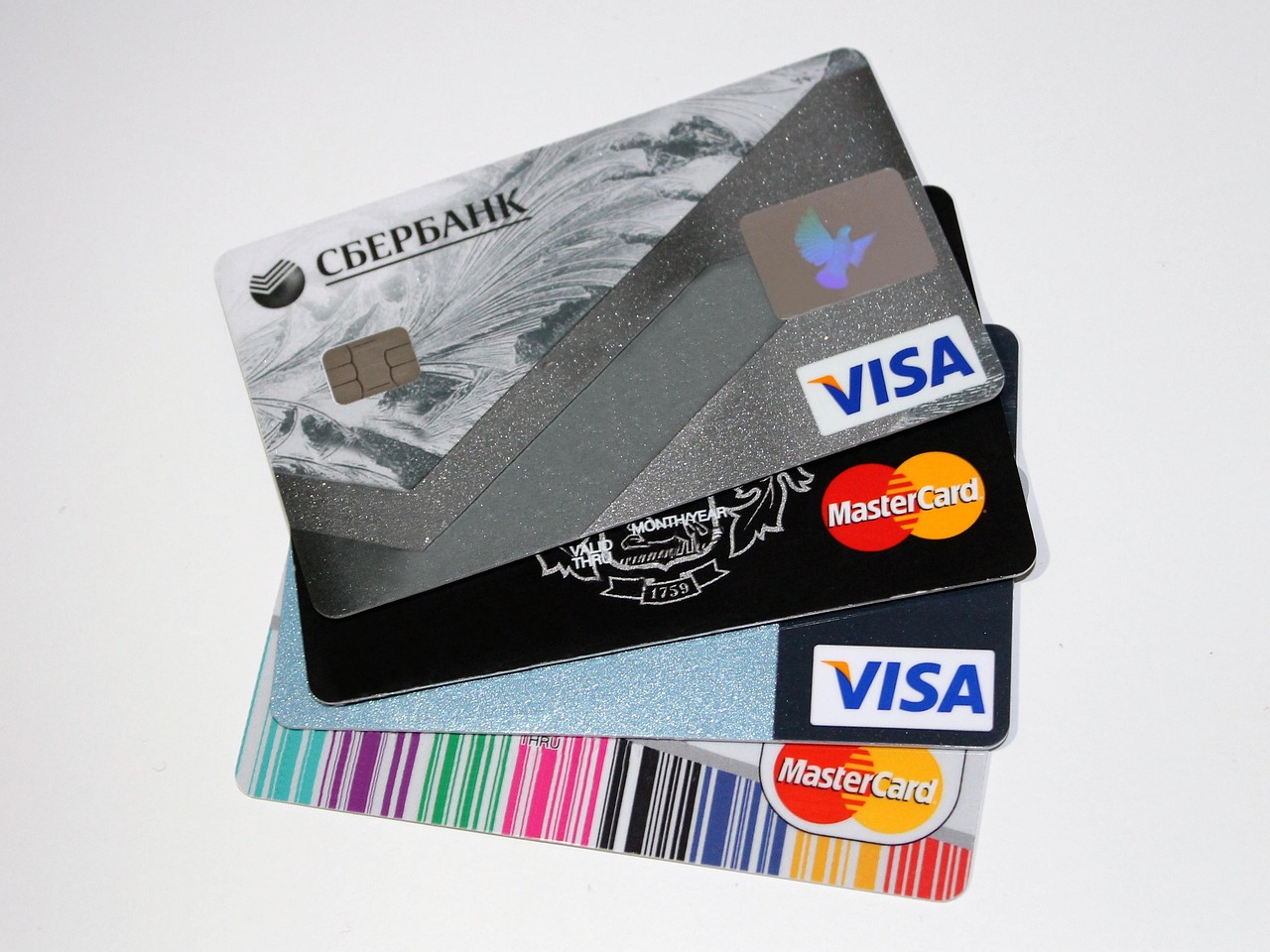
In 2025, Americans made $41.4 billion in credit card rewards. $15.2 billion of this was due to cash back. In an average case, an optimized setup of a cash back card pays between $300 and $500 yearly. No changes in shopping habits are required for such results. The difference between $28 earned with an ordinary card and the aforementioned result is the primary motivation to optimize your cash back setup in 15 minutes.
There are three types of cash back credit cards in 2026: flat-rate cards that give the same percentage on every purchase (Wells Fargo Active Cash at 2% unlimited cash back is the gold standard), category cards with elevated cash back rates on certain types of expenses (American Express Blue Cash Preferred at 6% on US supermarket purchases), and complementary card pairs that help earn rewards based on your particular spending profile.
According to a Bank of America survey reported by rewards research aggregation sites, 80% of users with cash back cards have never changed the primary spending card. The vast majority of them are stuck with cash back rates between 1% and 1.5% when much higher rates can be found for similar fees and benefits structures. Therefore, the best cash back card is the one paying the most on your expenses.
Flat-Rate Cash Back Cards: The Best Starting Point for Most Cardholders
The Wells Fargo Active Cash Card provides unlimited 2% cash back on every purchase and is one of the best flat-rate cards available to most cardholders. It comes with no annual fee and no spending caps or rotation bonuses that make the reward difficult to manage. The 2% unlimited rate is higher compared to 1.5% offered by Chase Freedom Unlimited and lower 1% to 2% rates of the Citi Double Cash card, where you need to pay the balance in full to get the second 1%. The Wells Fargo Active Cash provides $200 cash rewards bonus for spending $500 in the first three months.
The Citi Double Cash earns 1% cash back on purchase and 1% on payment, for an effective 2% on purchases paid off in full. As far as rewards go, the card equals the Wells Fargo Active Cash when the cardholder does not carry balances. However, the Citi Double Cash has no annual fee and pairs perfectly with Citi’s ThankYou Points program to convert your rewards into travel miles.
Chase Freedom Unlimited gives 1.5% cash back on general purchases, 3% on dining out, and 5% on travel booked via Chase website. For a cardholder with heavy expenditures on dining out, this card may outperform the Wells Fargo Active Cash on the category of dining. In the meantime, it will earn fewer points in other categories. It also gives Chase Ultimate Rewards points, which makes it the primary Chase travel rewards card.
Flat-rate cards are better for cardholders with diverse expenses who do not wish to track bonuses or use multiple cards. At the same time, they will lose to category-specific cards with concentrated expenses in a couple of categories.
Category Cash Back Cards: Higher Rates Where You Actually Spend
The American Express Blue Cash Preferred earns 6% cash back on up to $6,000 US supermarket purchases per year, $1% on US grocery purchases over $6,000 per year, 6% cash back at US streaming subscription services, 3% at US gas stations and on US transit spending, and 1% on other spending. A household that spends $400 per month on groceries will earn $288 per year on the category alone ($95 annual fee is waived for the first year).
There are some limitations: the 6% rate is only for US supermarkets; it does not include US warehouse clubs or superstores. Spending caps mean that 6% is valid for purchases totaling up to $500 monthly. If your monthly grocery expenses are larger than that, the card stops providing good value due to its low cash back rate. The $95 annual fee needs at least $1,583 of annual expenses on groceries to pay off versus a no-fee 2% flat-rate card.
The Chase Freedom Flex earns 5% cash back on quarterly bonus categories with a cap of $1,500 per category in four quarters. Additionally, it gives 5% on travel purchases, 3% on dining out and drug store spending, and 1% on other purchases. The cardholder will have to activate the category manually in order to earn rewards, but if he or she is willing to put in extra effort, the card will often outperform the flat-rate competition during the period.
Category cards are better suited for those cardholders with focused expenses in certain categories and ready to spend extra time managing their cards. Otherwise, a flat-rate card may provide better value.
Pairing Cards: How to Stack Cash Back Across Multiple Cards
Limiting yourself to just one card lowers the upper bound of potential earnings. The optimal cash back setup involves the use of two cards: one flat-rate card for regular expenses and one category card for the top-spend category. Using two cards does not require more effort than keeping the cards in your wallet and switching from one card to another.
The combination of cards that will work best for most users is the American Express Blue Cash Preferred (6% groceries and 3% streaming/US transit spending) and Wells Fargo Active Cash (2% on all other categories). If we assume a household with monthly expenses of $600 on groceries and $2,000 on all other purchases, the combined earnings will be $912 per year, minus the $95 annual fee, equaling $817. This combination beats the 2% flat-rate card by $193.
For Chase rewards enthusiasts, a trio including Freedom Flex (5% on quarterly categories), Freedom Unlimited (1.5% base, 3% dining), and Sapphire Preferred provides the maximum possible earning ceiling for the highest spending household travelers.
I believe that most cardholders underestimate the power of using two cards, as it seems like a complicated strategy to implement, but in reality, the change in daily activities is minor. You have to use the appropriate card when doing grocery shopping, and another card at all other times.
What to Watch Out For: The Cash Back Card Trade-offs
Sign-up bonuses represent the single transaction with the maximum possible value that a user can make with a new credit card. $200 sign-up bonus of the Wells Fargo Active Cash and $250 bonus statement credit of Blue Cash Preferred for spending $3,000 within six months will be lost forever if you fail to get them.
Foreign transaction fees make it impossible to gain any benefits with most cash back cards while traveling overseas. Wells Fargo Active Cash and Blue Cash Preferred have approximately 3% foreign transaction fee, which effectively cancels out any cash back on international purchases. If you frequently travel internationally, use your regular cards and switch to another for all international purchases.
Annual Percentage Rate (APR) is an irrelevant parameter for most cash back cardholders, as they repay their debts completely every month. If you have a balance left, the 20%-plus APRs wipe out any cash back earnings. The cash back is designed specifically for paying off the balance.
FAQ: Best Credit Cards for Cash Back in 2026
What is the best flat-rate cash back credit card in 2026?
The Wells Fargo Active Cash Card is the best flat-rate card in 2026. It has unlimited cash back rate of 2%, no annual fee, no tracking of rotating categories, no spending caps, and no complicated reward system requiring paying off the balance.
Is the American Express Blue Cash Preferred worth the annual fee?
The $95 annual fee of the Blue Cash Preferred pays for itself for the average user who spends $1,583 on groceries per year. In most cases, if you spend $400 to $600 per month at supermarkets, the Blue Cash Preferred will be preferable to the Wells Fargo Active Cash.
Should I get one cash back card or multiple?
Using two cards is optimal for most households: one flat-rate card for all other expenses and a category card for your top-spending categories.
Do cash back credit cards affect your credit score?
A hard inquiry is conducted when you apply for a new card. Your FICO score decreases by about 5-10 points temporarily, but the impact disappears in three to six months. For cardholders expecting to take out a mortgage or refinance loans in the near future, it might be better to delay new applications.
Which Card to Apply for This Week
Spend 10 minutes examining your purchases from the last three months. Look into your expenses on groceries, gasoline, restaurants, streaming, and non-target spending.
If the primary expense is food and you usually buy it in a supermarket, not in Costco or Walmart, then you need to apply for the American Express Blue Cash Preferred. If there is a need for a no-fee solution, apply for the Wells Fargo Active Cash. If you frequently dine out and need access to the travel rewards ecosystem, then the card of choice is Chase Freedom Unlimited.
The choice of the card you will use for years is something that should be taken seriously. The difference between 1% and 2% cash back compounding over numerous purchases is huge. Most people leave hundreds of dollars unearned because of their laziness.