

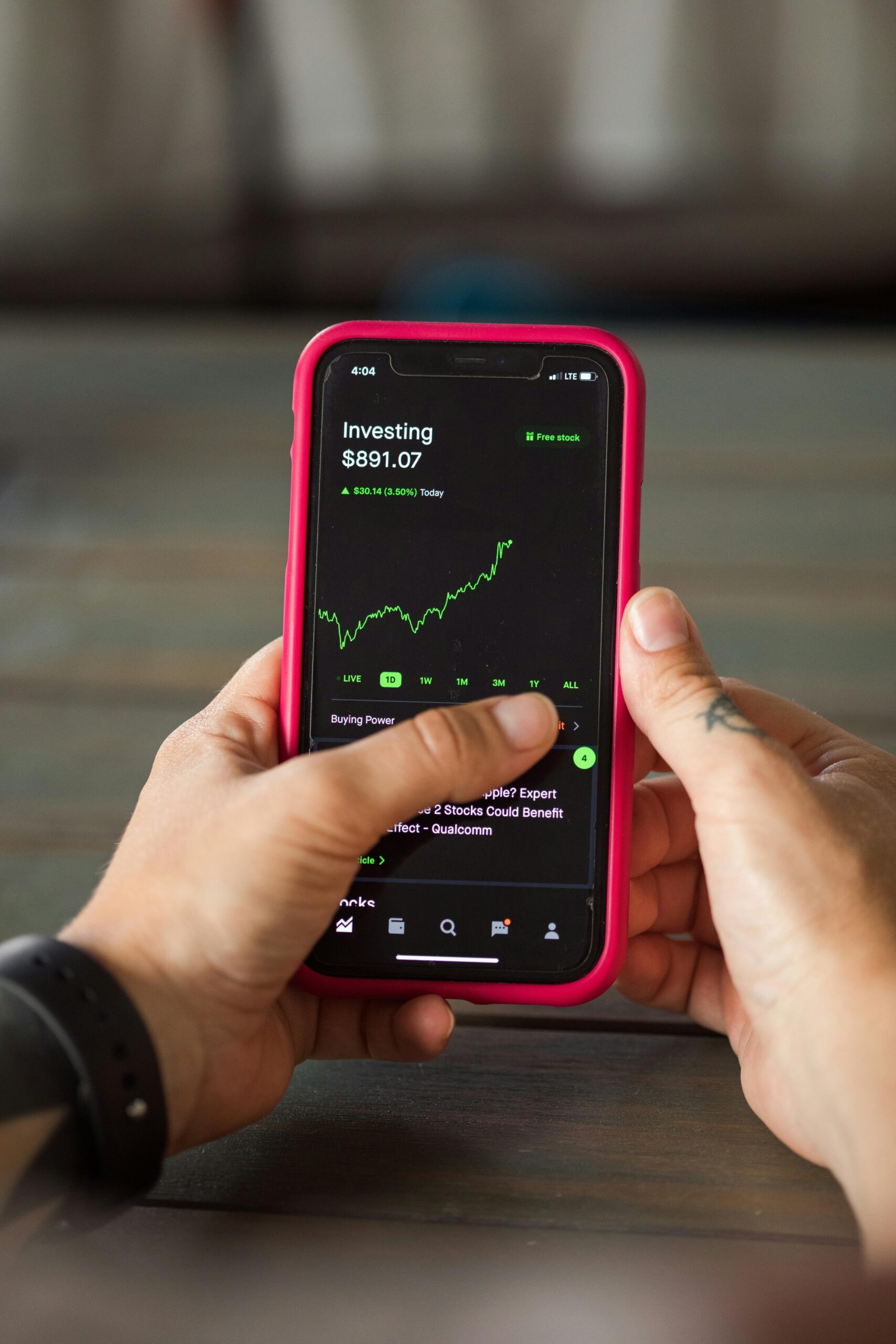
Imagine if you had invested just $200 a month into the stock market a decade ago. According to The Motley Fool, the S&P 500 returned an average of 13.5% annually over the last ten years. That modest monthly investment would have grown into nearly $53,000 today. Yet, many people stay on the sidelines because the world of stocks and crypto feels like an exclusive club with a high barrier to entry. Fear of losing money or feeling “not smart enough” to pick the right app often keeps potential wealth-builders stuck in low-interest savings accounts.
In this guide, we break down the top investment apps based on 40+ hours of research and analysis of 15 leading platforms. We promise to strip away the jargon and show you exactly how to put your money to work with confidence. Whether you want to buy your first fractional share of a major tech company or automate your savings, the right tools are now more accessible than ever. It’s time to stop watching from the sidelines and start participating in the growth of the global economy.
What Is an Investment App?
An investment app is a mobile or desktop software platform that allows individuals to buy, sell, and manage financial assets like stocks, bonds, and exchange-traded funds (ETFs) directly from their devices. These platforms serve as a digital bridge between your bank account and the financial markets, removing the need for a traditional, expensive human stockbroker.
To understand how an investment app works, think of it as a digital shopping cart for your future. In the past, if you wanted to buy a stock, you had to call a broker who would charge a high commission to execute the trade for you. Today, an investment app acts like a supermarket: you browse different “products” (like a piece of a company or a basket of various industries), pick what you want, and checkout with a few taps. Most modern apps are designed specifically for beginners, offering educational tools and simplified interfaces to help you navigate the process without feeling overwhelmed.
Investment: The act of allocating resources, usually money, with the expectation of generating an income or profit over time.
Bottom line: An investment app is a user-friendly digital tool that democratizes access to financial markets, allowing anyone with a smartphone to start building a portfolio with very little capital.
How Investment Apps Work
Investment apps function by connecting your digital wallet to the stock market via a brokerage interface, allowing you to execute trades in real-time. When you place an “order” through the app, the software transmits your request to a market maker or exchange to finalize the purchase of an asset. Most apps today utilize a “mobile-first” design, meaning they prioritize simplicity and speed for the retail investor.
To start using these platforms, you typically follow a streamlined onboarding process:
- Account Creation: You provide basic personal information and link a funding source.
- Identity Verification: Per federal regulations (KYC/AML), you must provide your Social Security Number.
- Risk Assessment: Fill out a questionnaire to determine risk tolerance.
- Portfolio Selection: Choose specific stocks or a basket like an ETF.
- Execution: Enter the dollar amount and the app purchases shares.
Exchange-Traded Fund (ETF): A type of investment fund that holds a collection of assets—like stocks or bonds—and trades on an exchange just like an individual stock.
Using an app makes it easy to set up “recurring investments,” a strategy known as Dollar-Cost Averaging. According to Fidelity Investments, the S&P 500 has averaged an annual return of approximately 10% over the long term. If you invest $200 per month starting at 25, you could reach $1.2 million by 65.
Traditional Brokerages are better for high-net-worth individuals seeking human advice, while Investment Apps suit modern investors who prefer low fees and digital autonomy.
Bottom line: Investment apps automate the technical hurdles of the stock market, allowing you to move money from your bank to your portfolio with minimal friction.
Micro-Investing: Growing Wealth with Spare Change
Micro-investing is a financial strategy that allows users to invest very small amounts of money—often less than $1—into the markets on a frequent basis. This is typically achieved through “round-ups,” where an app monitors your daily spending and invests the difference between your purchase price and the next whole dollar.
For example, if you buy a coffee for $3.60, a micro-investing app will “round up” the transaction to $4.00 and automatically move the $0.40 into your investment account. This removes the psychological barrier of needing a large lump sum.
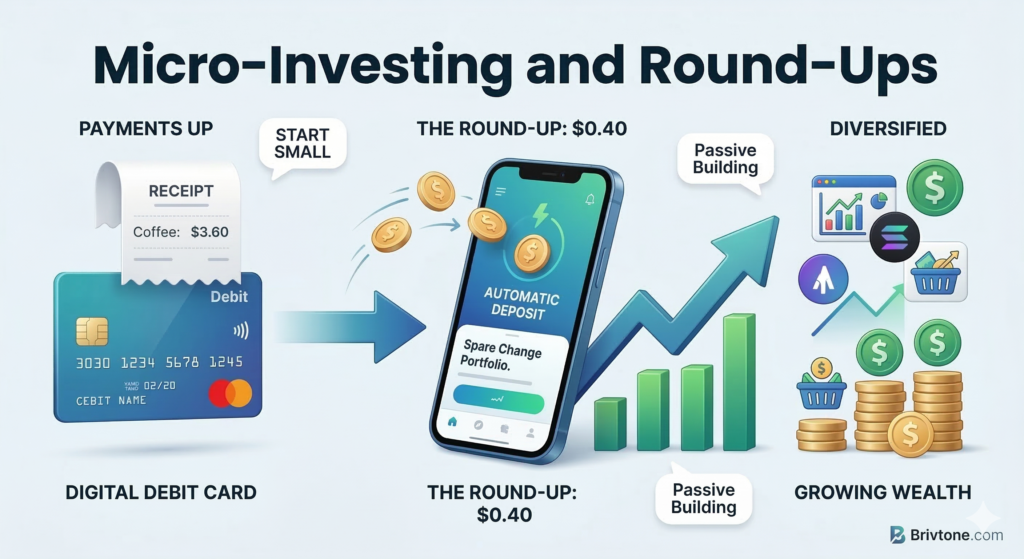
Fractional Share: A portion of a whole share of stock, allowing you to buy high-priced companies (like Nvidia or Apple) with as little as $1.
Data points:
- According to Persistence Market Research, the global micro-investing platform market is valued at US$ 4.2 billion as of early 2026.
- Mobile-based platforms dominate approximately 78% of this sector.
- The average user can save $30 to $50 per month without changing lifestyle habits.
Micro-investing apps are better for students and first-time savers, while Full-service trading apps suit those ready to pick individual stocks.
Bottom line: Micro-investing turns your everyday spending habits into a passive wealth-building engine.
Commission-Free Trading: Buying Stocks and ETFs
Commission-free trading is a service offered by modern brokerage apps where you can buy or sell individual stocks and ETFs without paying a per-trade transaction fee. This allows investors to keep 100% of their principal working in the market.
Stock: A security that represents ownership in a fraction of a corporation.
According to Bankrate, as of early 2026, nearly all major US consumer brokerages have maintained a $0 commission policy for online stock and ETF trades.
Fidelity is better for investors who want robust educational resources, while Robinhood suits users who prefer a streamlined, mobile-first experience.
Bottom line: Commission-free trading has removed the “pay-to-play” barrier.
Robo-Advisors: Hands-Off Wealth Management
A robo-advisor is an automated digital platform that provides algorithm-driven financial planning services. These apps build and manage a diversified portfolio of ETFs on your behalf based on your goals.
Rebalancing: The process of realigning the weightings of a portfolio’s assets to maintain a desired level of risk.
According to Morningstar, the median robo-advisor fee in 2026 is approximately 0.25% of assets per year.
Robo-advisors are better for “set-it-and-forget-it” investors, while DIY Brokerage accounts suit those who want total control.
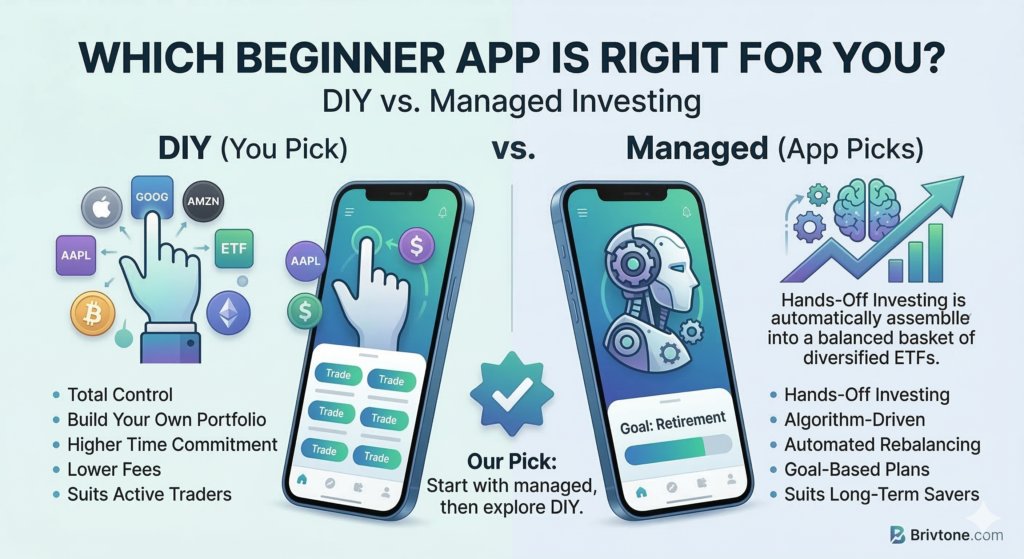
Bottom line: Robo-advisors provide professional management at a fraction of the cost of a human advisor.
A crypto app is a specialized digital platform or exchange that allows users to buy, sell, and store cryptocurrencies like Bitcoin and Ethereum.
Cryptocurrency: A digital or virtual currency that is secured by cryptography.
According to CoinMarketCap, as of March 2026, the total cryptocurrency market capitalization stands at approximately $2.41 trillion.
Coinbase is better for users who want to explore hundreds of different coins, while Robinhood suits casual investors who only want major assets.
Bottom line: Crypto apps provide the most direct gateway to the digital economy.
Comparison Table: Top Investment Apps at a Glance
| Platform | Min. Invest | Fees | Best For | Risk Level | Our Pick |
| Fidelity Go | $0 | $0 (<$25k) | Hands-off | Low-Med | Top Robo |
| Acorns | $0 | $3-$9/mo | Micro | Low | Top Micro |
| Robinhood | $1 | $0 | Active | Med-High | Best UI |
| Coinbase | $2 | Variable | Crypto | High | Best Crypto |
| Vanguard | $1 | $0 | Retirement | Low | Best IRA |
Step-by-Step: How to Get Started with Your First App
1. Select Your Platform (e.g., Acorns or Fidelity).
2. Complete the KYC Process (Legal identity verification).
3. Fund Your Account (Link bank via Plaid).
4. Choose Your First Investment (e.g., S&P 500 ETF).
5. Enable Auto-Invest (Set up recurring transfers).
Plaid: A financial technology company that acts as a secure “handshake” between your bank and your investment app.
Bottom line: Getting started is no longer a paperwork-heavy ordeal.
Risks to Be Aware Of
- Market Volatility: Drops of 10%+ happen every ~1.6 years.
- Platform Security: Check for SIPC insurance.
- Inflation Risk: Returns must beat inflation to grow purchasing power.
- Liquidity Risk: Some assets take time to sell.
- Emotional Bias: Panic-selling turns paper losses into real ones.
SIPC: A federally mandated corporation protecting customers up to $500,000 if the firm becomes insolvent.
Bottom line: Risk can be managed by diversifying and keeping an emergency fund.
The biggest mistake beginners make is waiting too long. According to J.P. Morgan Asset Management, missing the 10 best days in the market can cut returns in half. Start now.
FAQ: Your Top Investing Questions Answered
Is it safe to invest right now?
It is safe to invest right now if you have a long-term horizon. Historical data from Investopedia shows the market is positive nearly 95% of the time over 10-year periods.
Can I lose all my money?
You can lose all your money on single risky stocks, but it is virtually impossible with diversified ETFs.
What is the best app for a total beginner?
Fidelity or Acorns are the best options for ease of use and automation.
How much money do I need to start?
You only need $1 to $5 on most modern platforms due to fractional shares.
Is my money protected if the app goes out of business?
Your money is protected up to $500,000 if the app is a member of the SIPC.
Conclusion
The best investment apps for beginners in 2026 are those that prioritize low fees, ease of use, and automation. Our research confirms that starting small with Fidelity, Acorns, or Vanguard is the most effective way to secure your financial future. We recommend setting up your first recurring investment this week.
——————–
Investment Disclaimer: Investing involves risk, including possible loss of principal. This article is for educational purposes only and does not constitute investment advice. Past performance is not indicative of future results.