


Tax-loss harvesting is one of the few legal strategies that lets you use a losing investment to reduce your tax bill – and most people with a taxable brokerage account are leaving this benefit on the table every year. In 2025, Betterment harvested nearly $60 million in losses for customers during a single stretch of market volatility, with nearly 70% of those customers covering their entire advisory fee through estimated tax savings. This is not a strategy reserved for wealthy investors or financial advisors. Anyone with a taxable brokerage account and some losing positions can use it.
Tax-loss harvesting: The practice of selling an investment that has declined in value to realize a capital loss, which can then be used to offset capital gains from other investments or reduce taxable ordinary income by up to $3,000 per year. The key is reinvesting the proceeds into a similar (but not identical) security so your overall portfolio allocation stays intact.
In this guide, we break down exactly how tax-loss harvesting works, the rules you need to follow, how much it can actually save you, and when it makes sense versus when it does not. The strategy only applies to taxable brokerage accounts – not IRAs or 401(k)s – and the wash-sale rule is the critical compliance boundary you need to understand before you sell anything.
How Tax-Loss Harvesting Actually Works
The mechanics of tax-loss harvesting are straightforward. When you sell an investment for less than you paid for it, you realize a capital loss. The IRS allows you to use that loss to offset capital gains you have realized elsewhere in your portfolio during the same tax year. If your losses exceed your gains, you can deduct up to $3,000 of the remaining loss against your ordinary income. Any amount beyond $3,000 carries forward indefinitely to future tax years – it does not expire.
Capital loss carryforward: The unused portion of a capital loss that exceeds the $3,000 annual deduction limit against ordinary income. This carried amount can be applied against future capital gains or ordinary income in subsequent tax years without an expiration date.
Here is a concrete example. You hold two ETFs in a taxable account. One is up $15,000 this year. Another is down $12,000 from your purchase price. Without any action, you would owe capital gains tax on the $15,000 gain when you sell. If you harvest the $12,000 loss by selling that ETF and immediately buy a similar but different ETF to maintain your exposure, your net taxable gain drops to $3,000. At the 15% long-term capital gains rate, that is a tax savings of $1,800 on that one trade.
Long-term capital gains are better for tax efficiency than short-term capital gains because assets held more than one year are taxed at 0%, 15%, or 20% depending on income, while short-term gains are taxed as ordinary income at rates up to 37%./p>
- Losses offset gains dollar-for-dollar: Long-term losses offset long-term gains first; short-term losses offset short-term gains first. If there is an excess of one type, it can then offset the other type.
- The $3,000 limit is against ordinary income only: There is no cap on how much of a loss you can use to offset capital gains in the same year. The $3,000 ceiling only applies to the deduction against ordinary income like wages or salary.
- You must stay invested: The point is not to exit the market – it is to swap into a similar holding so your asset allocation stays the same while you capture the tax benefit.
- Taxable accounts only: Tax-loss harvesting has no application in IRAs or 401(k)s. Those accounts do not generate annual taxable events on gains, so there is nothing to offset.
2025 and 2026 Capital Gains Tax Rates
The amount you save from tax-loss harvesting depends entirely on what rate your gains would have been taxed at. For 2025, the long-term capital gains rate is 0% for single filers with taxable income up to $48,350 and married couples filing jointly up to $96,700. The 15% rate applies to single filers between $48,351 and $533,400 and joint filers between $96,701 and $600,050. Above those thresholds, the rate is 20%.
Net Investment Income Tax (NIIT): A 3.8% surtax applied to investment income including capital gains for high earners. It applies to single filers with modified adjusted gross income above $200,000 and joint filers above $250,000. Combined with the 20% capital gains rate, the effective top rate on investment gains can reach 23.8%.
For 2026, the IRS has adjusted the thresholds slightly upward for inflation. The 0% long-term rate applies to single filers up to $49,450 and joint filers up to $98,900. The 15% bracket extends to $545,500 for singles and $617,700 for joint filers. These adjustments are modest, but they are worth knowing if you are doing year-end planning.
- Short-term gains are taxed as ordinary income: If you sell a position held for one year or less, the gain is taxed at your regular income tax rate, which can be as high as 37%. Harvesting long-term losses to offset short-term gains generates the largest tax benefit when the income rate is significantly higher than the long-term rate.
- The 0% rate is real and underused: If your taxable income falls below the 0% threshold, any long-term gains you realize are tax-free. In that case, harvesting losses to offset those gains provides zero benefit and could actually hurt you by reducing your cost basis unnecessarily.
- State taxes add another layer: Many states tax capital gains as ordinary income, which can add 5-13% on top of federal rates depending on where you live. California, for example, taxes capital gains at up to 13.3%. State taxes make tax-loss harvesting even more valuable for residents of high-tax states.

The Wash-Sale Rule: The One Rule You Cannot Break
The wash-sale rule is the IRS mechanism that prevents investors from selling a security at a loss and immediately buying back the same security just to generate a paper tax loss. If you violate it, the IRS disallows the loss for that tax year – you do not get the deduction.
Wash-sale rule: An IRS rule that disallows a capital loss deduction if you purchase the same or a substantially identical security within 30 calendar days before or after the sale that generated the loss. This creates a 61-day window in total: 30 days before the sale, the day of the sale, and 30 days after.
The key compliance question is what counts as “substantially identical.” The IRS has not published a precise definition, but the practical guidance is clear in most cases. Selling a Vanguard S&P 500 ETF (VOO) and buying a Schwab S&P 500 ETF (SCHX) that also tracks the S&P 500 likely triggers the wash-sale rule because they track the same index. Selling VOO and buying a total U.S. stock market ETF like VTI is generally considered safe because the indexes are different, even though the holdings overlap significantly.
ETF tax-loss harvesting pairs are better for maintaining market exposure during the wash-sale period than individual stocks, because there are more functionally similar but not legally identical alternatives across ETF issuers.
- The rule applies across all your accounts: If you sell a stock at a loss in your taxable account and your spouse buys the same stock in an IRA within 30 days, you have triggered the wash-sale rule. The restriction covers accounts you own or control, not just the single account where the sale occurred.
- Disallowed losses are not lost forever: If you trigger a wash sale, the disallowed loss gets added to the cost basis of the replacement security. You will capture the tax benefit eventually when you sell that replacement position – it is deferred, not destroyed.
- Year-end timing is critical: To harvest a loss for the 2025 tax year, you must place the sell trade by December 31, 2025. ETFs settle T+2, which means the last practical trading day is typically December 29. Missing this window means the loss does not count until the following tax year.
- Mutual fund distributions can create accidental wash sales: If a mutual fund you hold distributes a capital gain in December and you also hold the same fund in a different account, that distribution can trigger wash-sale complications. This is a less common but real issue for investors holding the same fund across multiple accounts.
Automated Tax-Loss Harvesting With Robo-Advisors
For investors who do not want to monitor their portfolios manually for harvesting opportunities, robo-advisors have built automated systems that scan accounts continuously and execute harvesting trades when the tax benefit exceeds a threshold. Betterment and Wealthfront are the two most established platforms offering this as a standard feature.
Betterment offers Tax-Loss Harvesting+ as a free feature included in its standard 0.25% advisory fee. In Spring 2025, Betterment harvested nearly $60 million in losses across customer accounts during a period of market volatility. Nearly 70% of customers who had the feature enabled covered their entire advisory fee for the year through estimated tax savings from those harvested losses alone.
Wealthfront also includes automated tax-loss harvesting at no additional cost beyond its 0.25% annual fee. According to Wealthfront, its tax-loss harvesting provides an average of 1.8% extra return on an after-tax basis – more than six times the annual fee. For accounts over $100,000, Wealthfront also offers direct indexing, which holds individual stocks instead of ETFs and creates far more individual harvesting opportunities within a single portfolio.
- Direct indexing multiplies harvesting opportunities: A direct indexing approach holds hundreds of individual stocks instead of a single ETF. Research from Range in 2025 found that direct indexing strategies harvested an average of $18,281 in losses per household – 3.8 times more than ETF-only portfolios. At a 37% tax rate, that translates to approximately $6,764 in tax offsets per account per year.
- Automated platforms handle wash-sale compliance: One of the main advantages of using Betterment or Wealthfront for tax-loss harvesting is that the platforms automatically select replacement securities that avoid wash-sale violations. Doing this manually requires careful tracking of holdings across all your accounts.
- Larger firms offer it too: Fidelity, Schwab, and Vanguard all offer tax-loss harvesting as part of their managed account services, typically with higher minimum account sizes. Parametric Portfolio Associates, a direct indexing specialist, harvested over $8.8 billion in losses in 2025 with a potential tax benefit exceeding $3.3 billion across its client base.
Step-by-Step: How to Harvest a Loss Manually
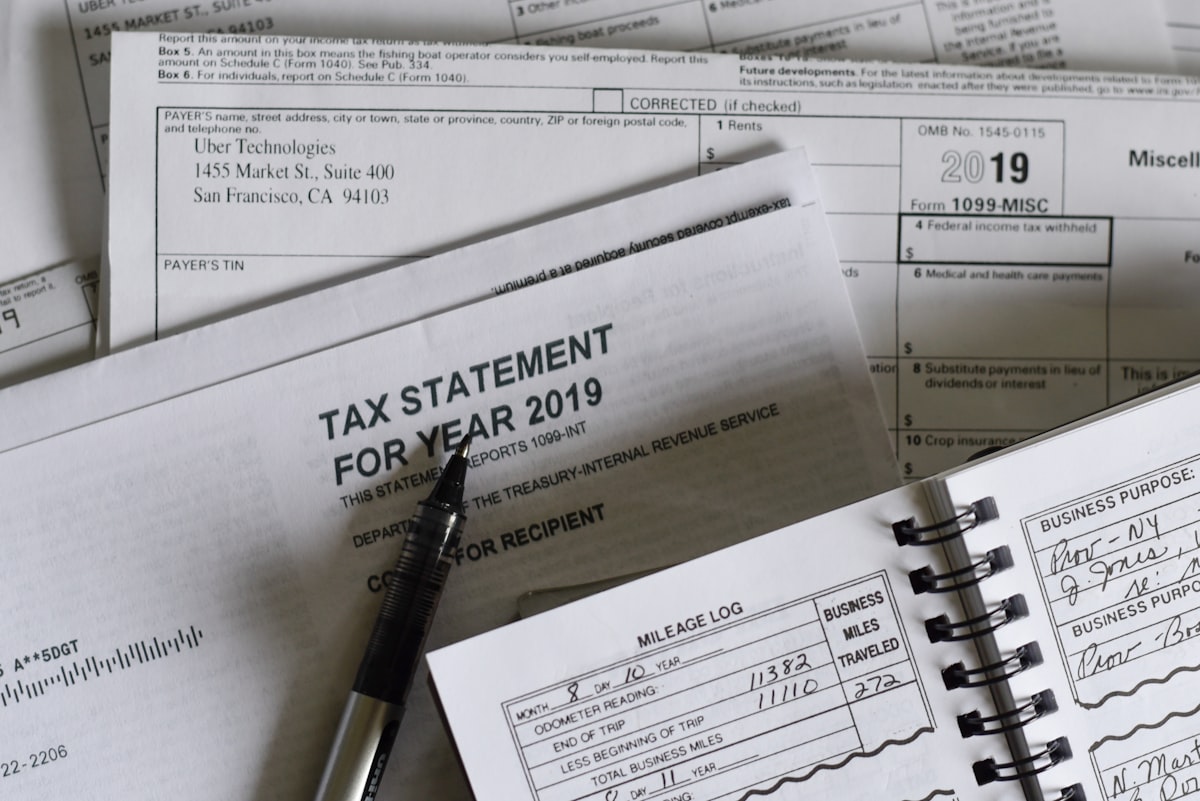
Manual tax-loss harvesting works best if you check your taxable accounts quarterly rather than waiting until December. Market corrections throughout the year create harvesting opportunities that disappear when prices recover. Here is the process from start to finish.
Cost basis: The original value of an asset for tax purposes – usually what you paid for it, adjusted for splits, dividends, and other events. Your capital gain or loss is calculated as the sale price minus the cost basis. Most brokers track cost basis automatically, but you should verify the method (FIFO, specific identification, or average cost) before harvesting.
First, identify positions in your taxable account that are trading below your cost basis. Your brokerage account shows unrealized gains and losses for each position. Focus on positions where the loss is large enough to generate meaningful tax savings – harvesting a $200 loss typically is not worth the effort unless you have other reasons to exit the position.
Second, identify a replacement security. The replacement should be in the same asset class and maintain similar risk and return characteristics, but it should not track the same index or be from the same company. Common examples include selling a large-cap U.S. equity ETF tracking one index and replacing it with a large-cap U.S. equity ETF tracking a different index.
Third, sell the losing position and immediately buy the replacement. You do not need to wait – the purpose of the replacement is to maintain your market exposure during the 30-day wash-sale window. Once 31 days have passed since the sale, you can choose to return to your original holding if you prefer.
- Use specific identification for cost basis: When selling, choose which tax lots to sell. If you bought the same ETF in multiple purchases, selling the highest-cost lots maximizes the loss you can harvest. Ask your broker to confirm the lot selection before executing.
- Document everything: Keep records of each harvest including the date of sale, the security sold, the sale price, your cost basis, the loss amount, and the replacement security purchased. You will need this for your tax return and to track the wash-sale window.
- Monitor through end of year: After harvesting, check whether your replacement security appreciates significantly before the 30-day window closes. Any gains on the replacement during that period will be short-term if sold, which could reduce the overall benefit.
FAQ: Tax-Loss Harvesting Questions
Is tax-loss harvesting worth it if I am in a low tax bracket?
Marginal tax rate: The rate applied to the last dollar of income you earn. For capital gains, this determines how much of each gain actually goes to taxes. If you are in the 0% long-term capital gains bracket – meaning your taxable income is below $48,350 for single filers in 2025 – tax-loss harvesting provides no benefit for offsetting long-term gains, because those gains were already tax-free. In that case, harvesting losses could actually reduce your cost basis and create higher taxes later when you sell at a higher income level. For investors in the 15% or 20% bracket, or those with short-term gains taxed as ordinary income, the benefit is real and worth pursuing. The strategy is most valuable for investors with significant realized gains and a tax rate above 15%.
Can I use tax-loss harvesting in my Roth IRA or 401(k)?
Tax-advantaged accounts: Retirement vehicles like IRAs and 401(k)s where money grows either tax-deferred (traditional) or tax-free (Roth), meaning annual gains and dividends do not generate a current tax liability. Tax-loss harvesting only works by creating a deductible loss on your tax return. Since IRA and 401(k) accounts do not generate annual taxable events on investment activity, there are no gains to offset and no deduction to take. You cannot harvest losses inside these accounts. However, the wash-sale rule does apply across accounts, so selling at a loss in a taxable account while buying the same security in your IRA within 30 days will disallow the loss.
How does tax-loss harvesting affect my cost basis long-term?
Step-up in basis: A tax provision that resets the cost basis of inherited assets to their fair market value at the time of inheritance, eliminating the embedded capital gain for heirs. Tax-loss harvesting reduces the cost basis of your replacement security, which means a larger gain when you eventually sell. This is the tax deferral trade-off: you reduce taxes now in exchange for potentially higher taxes later. However, if you hold the replacement security until death, your heirs receive a step-up in basis that eliminates the embedded gain entirely. For long-term investors who expect to hold assets for decades and pass them to heirs, the math strongly favors harvesting losses today and holding the replacement indefinitely.
How do I report tax-loss harvesting on my tax return?
Schedule D (IRS): The tax form used to report capital gains and losses from the sale of investments. When you harvest a loss, you report it on Schedule D along with any capital gains for the year. Your brokerage will send a Form 1099-B listing all sales, which flows into Schedule D. If you use TurboTax, H&R Block, or a similar software, you can import the 1099-B directly. Any net loss that exceeds your gains, up to $3,000, flows to line 13 of Form 1040 as a deduction against ordinary income. Amounts above $3,000 are tracked as a capital loss carryforward and reported on Schedule D in future years.
The Bottom Line on Tax-Loss Harvesting
Tax-loss harvesting is not complicated, but it requires attention to the wash-sale rule and consistent monitoring of your taxable account. The strategy works by turning temporary paper losses into real tax reductions without permanently altering your portfolio. In 2025, the documented results from platforms like Betterment, Wealthfront, and Parametric show that investors with actively managed taxable portfolios are capturing billions in tax savings through this approach annually.
If you have a taxable brokerage account with at least some diversified holdings, the first step is to review your unrealized losses and calculate the potential tax offset against any gains you have taken this year. You do not need to be in a high tax bracket for this to matter – anyone paying the 15% long-term rate or higher, or with short-term gains taxed as ordinary income, has something to gain from harvesting strategically. Use a robo-advisor to automate it, or handle it manually with a spreadsheet and a calendar reminder set 31 days after each harvest. Learn more at the IRS capital gains and losses guidance and Fidelity’s tax-loss harvesting overview.
Related links:
The 50/30/20 Budget Rule: Does It Actually Work?
The Truth About Buy Now Pay Later (BNPL) Services