

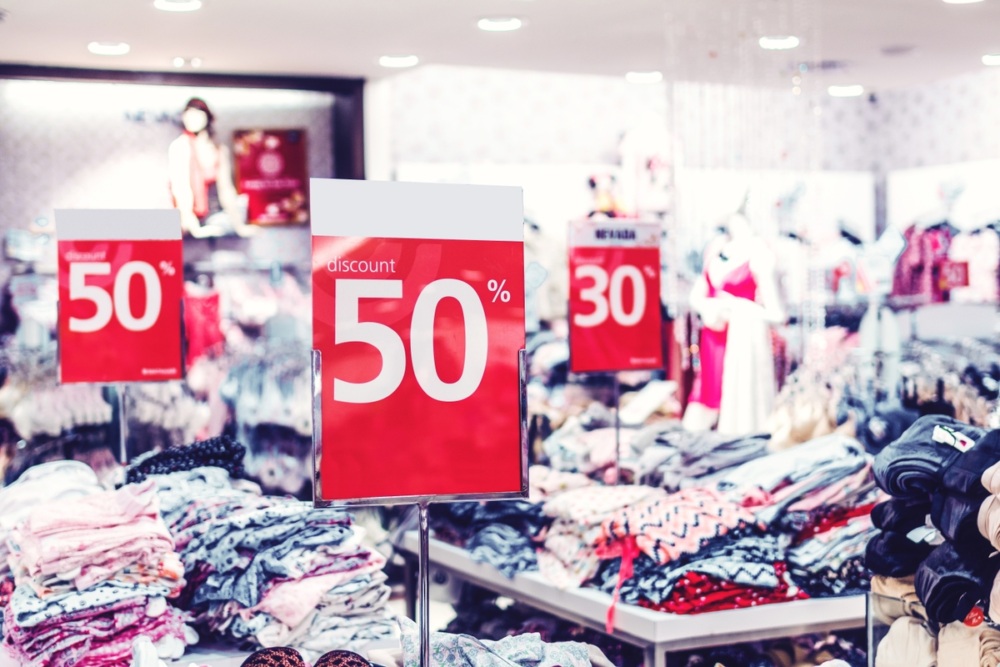
The average American made nearly 10 impulse purchases per month in 2024 and spent around $282 every single month on items they never planned to buy. That is over $3,300 a year leaving your wallet without a single conscious decision. Stores do not profit from your impulsive choices by accident. Every aisle, every price tag, and every “limited time” banner is the product of decades of behavioral research. This guide breaks down the exact tactics retailers use to get inside your head, and hands you a practical playbook to stop them.
Retail psychology: The study and application of consumer behavior science to store design, pricing, and marketing, with the explicit goal of increasing how much you spend per visit.
In this guide, we analyze six of the most powerful tricks stores use to manipulate your spending, backed by verified data from Capital One Shopping Research, Adobe Analytics, and peer-reviewed consumer behavior studies.
The Store Layout Is Not Designed for You
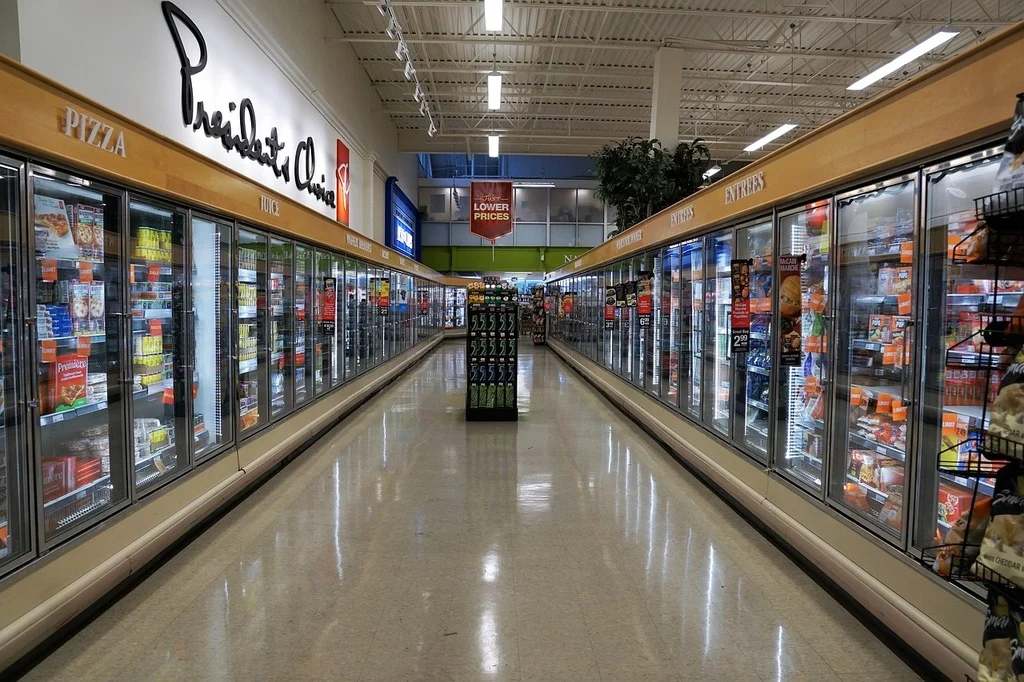
Store layouts are not built for your convenience. They are built to maximize the distance between you and whatever you actually came to buy. Placing essential items at the back of the store forces you to walk past thousands of products before you reach what is on your list.
Anchor items: High-demand essentials like milk, eggs, and bread that stores deliberately place at the back or far corners to pull shoppers through every aisle before they can leave.
According to JLL’s Grocery Report, the average shopper spends 23.4 minutes inside a grocery store in 2024. Every extra minute is another opportunity for an unplanned item to land in your cart. Research cited consistently across retail psychology literature finds that 60 to 70% of grocery store purchases are unplanned, a figure that retailers design their floor plans around.
Sticking to the store perimeter is better for buying fresh, unprocessed food and avoiding most impulse triggers, while heading straight into the aisles is better for retailers hoping you slow down and browse.
- The right-turn instinct: Research shows most shoppers instinctively turn right upon entering a store. Retailers place high-margin promotional products on that initial rightward path to catch you before you have even grabbed a basket.
- Eye level is buy level: Premium, high-margin products sit at eye level. Store-brand alternatives, often identical in quality but significantly cheaper, get pushed to the bottom shelf where you are less likely to look.
- Cross-merchandising traps: Related items are scattered across different sections on purpose. Chips near the salsa aisle, pasta near the wine section. Each trip to a core item creates a secondary impulse opportunity.
- The checkout zone: According to marketing research firm IRI, Americans spent $6 billion at checkout lanes in 2020 alone, with over $5 billion of it on food. Those small, low-cost items lining the register queue are not there for your convenience.
The store is a choreographed environment built to override your shopping list. Walking in without one is like walking into a casino without a budget.
Charm Pricing: Why $9.99 Feels Nothing Like $10
The price on the tag is not honest. It is engineered. Retailers have spent over a century refining a single psychological trick: making prices feel smaller than they are by anchoring your brain on the leftmost digit.
Charm pricing: The practice of ending prices in .99, .95, or .97 to exploit the “left-digit effect,” a cognitive bias where your brain registers $9.99 as closer to $9 than to $10.
According to Capital One Shopping Research, prices ending in 9, 99, or 95 increase sales by at least 24% compared to rounded prices, and in some cases by as much as 60%. A landmark MIT and University of Chicago study found that a shirt priced at $39 outsold the same shirt at the lower price of $34. Charm pricing can override basic price logic entirely. Today, approximately 60.7% of all retail prices end in the digit 9.
Charm pricing is better for everyday, mid-range, and impulse products. Rounded prestige pricing suits luxury goods, which is exactly why a Louis Vuitton bag costs $1,200 and not $1,199.99.
- Price anchoring: Stores display an inflated “original” price next to a sale price, training your brain to compare against the higher number. The “deal” you see is calculated to feel larger than it actually is.
- Decoy pricing: A third, intentionally unattractive option is added to a two-option lineup to make the more expensive choice look like better value. You were not choosing between two options. You were being nudged toward a specific one.
- Bundle pricing: Paying for a bundle in a single transaction feels less painful than paying for items individually, even when the total is identical. The single charge reduces the psychological sting of each individual price.
- JCPenney’s lesson: When JCPenney removed charm pricing in favor of straightforward round numbers in 2012, sales dropped sharply. They reversed course almost immediately, proving how deeply consumers are conditioned to read .99 endings as a deal signal.
Fake Urgency: “Only 3 Left in Stock”
The most effective trigger for unplanned spending is not desire. It is fear. Specifically, fear of missing out. Retailers have turned this fear into a precise toolkit that short-circuits your decision-making and pushes you to buy before your brain has time to ask whether you actually need something.
Scarcity marketing: A strategy that creates urgency by signaling limited availability, through stock alerts, countdown timers, or time-bound discounts, to trigger faster purchase decisions.
According to Amra and Elma, marketing campaigns that use scarcity tactics see conversion rate increases of up to 50%. Urgency-based email subject lines like “Ends in 3 hours!” generate around a third more click-throughs than standard campaigns. The underlying mechanism is loss aversion: research from the American Psychological Association confirms that people are more strongly motivated by the prospect of losing something than by gaining something of equivalent value.
Acting on real scarcity is reasonable when the shortage is genuine and the item is something you already planned to buy. Manufactured urgency is designed to bypass your judgment, not inform it, and should be treated accordingly.
- Countdown timers: Websites and email campaigns use ticking clocks to create time pressure. The visual of seconds disappearing is specifically engineered to trigger impulsive action before you close the tab.
- Low stock alerts: Amazon’s “Only 3 left in stock” sidebar warning is a deliberate nudge. The number may be accurate, but the placement and urgency framing exist to prevent you from thinking it over.
- Flash sales: Online flash sales and Black Friday events compress the decision window to hours. According to Adobe Analytics, online Black Friday 2024 spending hit a record $10.8 billion, fueled significantly by time-limited discount urgency.
- When fake urgency backfires: A retailer that manufactured “sold out” announcements and then mysteriously restocked identical items multiple times suffered a 37% drop in sales the following quarter after consumers exposed the tactic on social media, per documented retail marketing case studies.
Loyalty Programs Know More About You Than You Think
Your loyalty card is not primarily a discount tool. It is a data collection instrument that rewards you occasionally to keep you enrolled. Retailers use loyalty programs to track your full purchase history, predict your behavior, and deliver targeted promotions timed to when you are statistically most likely to spend.
First-party data: Purchase history, location, and behavioral data that retailers collect directly through loyalty programs, without relying on third-party advertisers or data brokers.
According to Accenture Research, members of loyalty programs generate 12 to 18% more incremental revenue per year than non-members. According to Capital One Shopping Research, 75% of loyalty program members actively change their spending behavior to earn more points or rewards, which means the program is doing exactly what it was designed to do. American consumers held 1.265 billion active loyalty memberships in 2024.
Loyalty programs work in your favor when you buy only planned items and harvest points passively. They work against you when they start changing what, when, and how much you buy.
- Personalized offers are precision instruments: Your purchase history tells the store exactly which product to discount for you, and by how much, to trigger a purchase you might have otherwise delayed or skipped.
- Points expiration pressure: Many programs set expiration dates on accumulated points, manufacturing urgency to spend before the reward disappears. The mechanism is identical to a countdown timer, just slower.
- Spending threshold traps: “Spend $150 this week to earn double points” is designed to make you overspend to hit an arbitrary target. You spend $20 more than you planned to earn a reward worth $3.
- Your data is the actual product: According to Forrester, 63% of US adults are willing to share personal information with brands in exchange for loyalty benefits. Retailers use this data to sharpen every future promotion sent to you.
Online Shopping: The Store That Never Closes

Physical stores close at 10 PM. The online version of every retail manipulation tactic runs 24 hours a day, on every device you own, personalized to your individual browsing and purchase history. E-commerce has not just moved retail online. It has made the manipulation faster, more targeted, and far harder to walk away from.
Dynamic pricing: Real-time price adjustments based on your browsing history, location, device type, and demand levels, meaning the same item can cost different amounts for different shoppers at the same moment.
According to Capital One Shopping Research, 84% of shoppers made impulse purchases in 2024, and 37% said they are more likely to buy impulsively online than in physical stores. According to research from Humboldt University of Berlin, Buy Now Pay Later (BNPL) services boost impulse conversion rates by 13% by removing the immediate psychological sting of spending. The purchase happens now. The pain arrives later.
Shopping with a clear list and a price comparison tool is better for resisting online impulse triggers. Browsing without intent is better for the retailer who wants something in your cart before you realize what happened.
- Retargeting ads: The jacket you looked at once will follow you across Instagram, YouTube, and every news site you read for days. Retargeting campaigns exist specifically to recapture shoppers who did not complete a purchase.
- One-click checkout: Amazon’s one-click purchasing removes every point of friction between impulse and completed transaction. The fewer steps between “I want this” and “I bought this,” the higher the conversion rate. You never get a moment to reconsider.
- Free shipping thresholds: According to Oberlo, free delivery is the top purchase motivator for over 53% of online shoppers. Stores set free shipping thresholds just above the average cart value, pushing you to add one more item to qualify.
- “Frequently bought together” placements: These are not editorial recommendations. They are algorithmically calculated to show you the item most statistically likely to result in an additional purchase, based on your history and the histories of shoppers like you.
How to Actually Fight Back
Knowing the tactics is step one. Changing your behavior around them is step two. The good news is that most of these tricks stop working the moment you spot them.
Stores win when you are distracted, rushed, hungry, or browsing without a goal. A 2024 NerdWallet survey conducted by The Harris Poll found that more than 1 in 5 Americans have made impulse purchases that significantly damaged their finances in the past 12 months, and 1 in 6 spent more on impulse buys than they put into their retirement accounts most months. These are not small numbers. They are the direct result of tactics you now know by name.
According to Capital One Shopping Research, 70% of all consumers have made an impulse purchase because an item was on sale. The sale is the trigger. The solution is not to avoid sales. It is to decide in advance what you are willing to buy, so the sale becomes a discount on a planned purchase rather than the reason for an unplanned one.
Shopping with a list is better for staying on budget and resisting layout and placement tricks. Shopping hungry, tired, or bored is better for retailers who need you in an emotionally reactive state.
- Make your list before you enter the store or open the app. A specific list is harder to deviate from than a general idea of what you need. Write down quantities and brands if it helps.
- Give yourself a 24-hour rule on any unplanned purchase over $30. If you still want it tomorrow, it was a real need. Most impulse urges disappear overnight.
- Turn off saved payment methods for non-essential shopping apps. One-click purchasing is designed to reduce friction. Adding one manual step, typing in your card number, is often enough to break the spell.
- Treat loyalty point expiration deadlines the same way you treat retail countdown timers. Both are urgency mechanisms. You do not have to act on either of them.
Stores have spent decades and billions of dollars studying how to separate you from your money before you have time to think. Spending ten minutes understanding their playbook is about the most cost-effective financial decision you can make.
FAQ: Retail Psychology and Impulse Spending
Why do I always buy things I didn’t plan to buy at the grocery store?
Impulse purchasing is an unplanned buying decision made in the moment, driven by emotional triggers rather than prior need. Research consistently finds that 60 to 70% of grocery store purchases are unplanned, which is not a personal failure. It is the result of store layouts, product placement, and sensory cues specifically designed to trigger unplanned purchases. The most effective counter is a written list consulted at every aisle, not willpower alone.
Is charm pricing actually effective, or is it a myth?
The left-digit effect is the cognitive tendency to anchor on the first digit of a price and underestimate the total. It is well-documented and consistently effective. According to Capital One Shopping Research, charm pricing increases sales by at least 24% and sometimes by as much as 60%. A 2003 MIT and University of Chicago study found that a shirt priced at $39 outsold the same shirt at $34. One cent of difference does not explain that result. Psychology does.
Are loyalty programs worth joining?
Loyalty programs are worth joining only if they change nothing about what you buy. If you already shop at a store and the program rewards you for purchases you would make anyway, the points are a genuine benefit. The problem starts when the program begins changing your behavior: spending more to hit a threshold, visiting more often to maintain status, or buying a different brand because the reward structure favors it. According to Capital One Shopping Research, 75% of loyalty members already change their behavior to maximize points. That is the retailer winning, not you.
Does the “limited time” pressure at online stores actually work?
It works reliably enough that most major e-commerce platforms use it by default. According to Amra and Elma, scarcity-based marketing campaigns see conversion rates increase by up to 50%. The mechanism is loss aversion: the fear of missing out on a deal activates the same psychological response as the fear of losing something you already own. The practical defense is to decide whether you want the item at full price before looking at the discount. If you wouldn’t buy it without the sale, the “limited time” pressure is doing the work, not a genuine need.
Conclusion
Retailers are not doing anything illegal. They are applying decades of verified behavioral science to get you to spend more than you planned on every visit. The tactics are consistent across physical stores and online platforms: confusing layouts, psychological pricing, manufactured urgency, data-driven personalization, and frictionless checkout. Each one works because it targets a real cognitive bias that every human being has.
The single most useful habit you can build is deciding what you want before you enter the environment designed to change your mind. Write the list, set the budget, and give large unplanned purchases a 24-hour cooling-off period. None of these steps require discipline in the moment because the decision has already been made.
You are not fighting your own impulses. You are fighting a multi-billion dollar industry that has spent decades studying them. That is a fairer fight once you know the rules.