

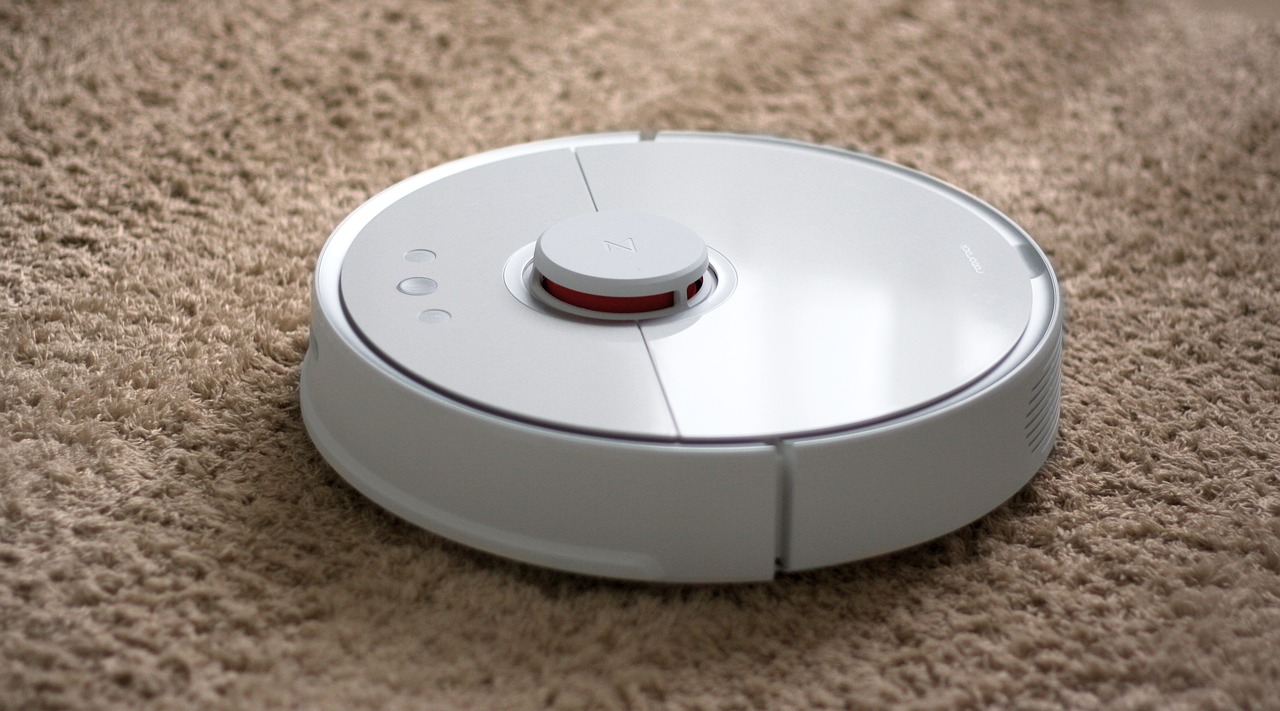
In 2026, the global robotic vacuum cleaner market was estimated at approximately $7 billion, with forecasted CAGR (compound annual growth rate) of 30.4% through 2030 according to Technavio’s robotic vacuum cleaner market analysis. What made the 30% CAGR possible is that by 2023, the robot vacuum technology reached its quality peak. Unlike early generations of robot vacuums that randomly bumped along furniture, modern robot vacuums systematically cleaned their assigned areas using LiDAR navigation; unlike early models with a limited 1-day hands-free period, the modern ones have self-emptying bases extending that period to 30 or more days; unlike vacuums with weak suction incapable of cleaning carpet properly, the modern ones reach high suction levels necessary for deep-clean.
The problem is that there are currently three tiers in the robotic vacuum industry, each offering unique features that make spending on the wrong tier both a poor financial decision and wasted opportunity. At the $300 level, you get a robot that crashes into furniture at random rather than systematically mapping and cleaning your floor. For a home with 600 square feet of hardwood floor, spending $1,200 on a full-station premium model is overkill. This article covers the best robot vacuum at each price tier, the features that actually matter versus those that are simply marketing embellishments, and who each price tier is appropriate for.
Best robot vacuum cleaner by tier: Budget (under $300) — the Tapo RV30 Max Plus. Mid-range ($400 to $600) — the Roborock Qrevo CurvX with a 92% carpet deep-clean score and zero hair tangles in independent lab testing. Premium ($800+) — the Roborock S8 MaxV Ultra ($899) with a dock that empties, refills, washes, and dries the mop after each cleaning cycle.
What Features Actually Matter in 2026
LiDAR navigation allows a robot vacuum cleaner to systematically clean your floor based on a precise map rather than randomly bumping into furniture. Every robot vacuum worth buying in 2026 has LiDAR — any model still using bump-and-turn optical navigation is a step backward regardless of its suction specs.
The presence of a self-emptying dock is more about convenience rather than cleaning performance. The robot’s dustbin fills after one to three cleaning sessions in most homes. A self-emptying dock transfers that debris into a larger bin that can go 30 to 60 days without manual intervention. For a primary robot in a pet household, this is close to essential. For a secondary robot in a low-traffic room, it is a nice bonus.
Vacuuming suction power measured in Pascals is an important parameter on carpet only; for hard floors, 2,000 Pa is sufficient. On medium-pile carpet, 3,000 to 5,000 Pa produces significantly better deep-clean results. Premium robots in 2026 advertise 8,000 to 30,000 Pa — the high end is engineered for heavy carpets and embedded pet hair rather than everyday use. Do not pay for 10,000+ Pa if you primarily have hard floors.
There are two types of mopping systems on the market — those that actually mop your floors and those that simply drag a damp cloth. The best mopping systems in 2026 use sonic vibration (Roborock) or dual rotating pads (Eufy) to actively scrub hard floors. Budget robot mop attachments that drag a wet pad produce marginal results on anything beyond freshly settled dust. If mopping matters to you, verify the specific mopping capability rather than just checking whether the spec sheet mentions it.
Premium Robot Vacuums ($800 and Above): The Best of 2026
At $899.99, the Roborock S8 MaxV Ultra is the most efficient hands-free cleaning robot vacuum available in the 2026 market. Its 8-in-1 RockDock Ultra station empties the dustbin, refills the water tank, washes and hot-air-dries the mop pads after every cleaning cycle — the only manual tasks left are emptying the base’s waste bin every four to six weeks and topping up the water reservoir. The FlexiArm side brush reaches corners and wall edges that fixed-arm robots miss. Its 10,000 Pa suction handles hardwood debris and deeply embedded carpet pet hair. Camera-based obstacle avoidance reliably identifies and routes around shoes, cables, and pet waste.
An alternative to the Roborock S8 MaxV Ultra for a household that prefers mopping with sonic vibration and self-emptying at equivalent or slightly lower cost is the Eufy X10 Pro Omni ($799 to $899). The 8,000 Pa suction performs comparably to the Roborock on most surfaces. Eufy’s app is widely considered more user-friendly than Roborock’s. The main trade-off is the absence of the FlexiArm side brush, which means the Eufy is slightly less effective at reaching wall edges. According to Vacuum Wars’ Eufy X10 Pro Omni review, it delivers flagship features at half the cost compared to earlier-generation premium models.
If your household has both carpet and hardwood floors, you own several pets, and you want a cleaning system that genuinely runs weeks between manual interventions, a premium robot vacuum is the right investment. For small apartments, pet-free households, or anyone whose primary need is vacuuming rather than combined vacuum-and-mop capability, the premium tier is harder to justify.
Mid-Range Robot Vacuums ($300 to $600): The Sweet Spot
The Roborock Qrevo CurvX is currently rated as a benchmark at the mid-range tier ($400 to $600). Why? The reason is that in independent lab testing, it achieved a 92% carpet deep-clean score and 0% hair tangle rate — performance that ranks third overall across all price categories in the Vacuum Wars database, regardless of cost. The CurvX’s curved design improves corner-reaching, and its dock handles self-emptying and basic mop washing at roughly half the price of premium models. It is the clearest mid-range recommendation for households that want real cleaning performance without full-station automation.
Mid-range robots do well in everyday cleaning compared to the premium models of the 2026 market. Compared to premium models, the mid-range tier lacks hot-air mop drying (which prevents mold in the base), camera-based obstacle avoidance (mid-range uses LiDAR plus sensor-based avoidance that is less precise on small objects), and full auto-refill-and-drain water management. For most households, these are convenience features worth skipping to save $300 to $400.
A mid-range robot vacuum is recommended for households that require good cleaning performance but not all extras of a full automation station, for buyers who are on a specific budget, or as a second robot dedicated to a specific zone like a home office or bedroom.
Budget Robot Vacuums Under $300: Where the Value Story Has Changed
The $299 price tag in 2026 does not signify the same value as it did a couple of years ago. Why? The reason lies in the falling price of LiDAR navigation components, which now enables systematic floor mapping even in entry-level robots. A budget robot in 2026 that maps your floor systematically cleans it more thoroughly than any random-path robot at the same price from 2022.
The Tapo RV30 Max Plus is equipped with LiDAR navigation, comes with a self-emptying dock, and has 5,300 Pa of suction — a combination that would have required spending $400 to $500 two years ago. According to Vacuum Wars’ budget robot vacuum rankings for April 2026, the Tapo RV30 Max Plus earns its top position by delivering features that typically cost $400+ in competing models. The self-emptying dock gives budget buyers the core hands-free benefit even without the premium mop-washing and hot-air-drying features.
A robot vacuum under $300 is a better choice in an apartment without pets, small or medium-size apartment, apartment primarily with hard floors, for first-time buyers testing the category before committing to a higher price, and for anyone who needs systematic vacuuming without mopping capability.
FAQ: Best Robot Vacuums in 2026
Is Roborock or Eufy better in 2026?
When it comes to premium robot vacuums, Roborock’s S8 MaxV Ultra is slightly better at picking up pet hair because of the FlexiArm side brush and more precise camera-based obstacle avoidance versus sensor-based on the Eufy. In the mid-range tier, both brands deliver similar independent test results. Eufy’s app is generally more intuitive for new users. Roborock’s app gives more granular zone control for experienced users. At equivalent price points, app preference and specific feature requirements determine the better choice more than raw performance differences.
Do I need a self-emptying base in 2026?
For a household that has pets that shed their hair frequently and runs daily vacuuming routines, a self-emptying base is nearly essential — the dustbin fills after one to two sessions with pet hair, and without it you are manually emptying after every run. For a low-traffic household with no pets that only runs the robot two to three times a week, a self-emptying base is a genuine convenience upgrade but not essential. The self-emptying segment represented 35% of robot vacuum revenue in 2023 and has grown substantially since, which shows how quickly the feature shifted from premium to expected.
What is the best robot vacuum for pet hair in 2026?
Roborock’s S8 MaxV Ultra is currently the best option for houses with pet hair due to its 10,000 Pa suction, zero hair-tangle rate in lab tests, and full self-emptying base handling high daily hair volumes. The Eufy X10 Pro Omni performs comparably on suction and hair removal at a similar price. For budget pet hair situations, the Tapo RV30 Max Plus handles moderate shedding well with its self-emptying dock — but for multiple pets or heavy-shedding breeds, the mid-range or premium tier is worth the extra investment for higher suction and a larger base bin.
How often should a robot vacuum run?
Daily runs produce the best results as far as pet hair goes because they ensure no debris accumulates in order to require several passes. For pet-free households with moderate foot traffic, three to four runs per week maintains floor cleanliness without prematurely wearing out components. Most manufacturers rate brushes and filters for 200 to 300 operating hours — at one hour per run, daily use means replacing consumables every seven to ten months. Scheduling the robot to run while you are out means a clean floor when you return without any manual trigger.
Which Robot Vacuum to Buy This Week
To answer this question, there are three things to evaluate: pet hair, floor area, and the total cost including the docking station. Pet owners with medium to large homes should go directly to mid-range or premium — the performance difference between a $229 budget robot and a $599 mid-range on daily pet hair pickup over a year justifies the price gap. Non-pet households in apartments under 800 square feet should look at the Tapo RV30 Max Plus at $229: it has LiDAR, a self-emptying base, and sufficient suction for the job.
The single most important tip when buying a robot vacuum for the first time is to choose a reputable brand and make sure that they offer app support, replacement parts, and firmware updates. Cleaning performance differences between the top five brands in each tier are smaller than spec sheets suggest. The real differentiator in long-term ownership is update support, parts availability, app reliability, and customer service when the dock malfunctions. Roborock, Eufy, and Tapo (TP-Link’s smart home brand) all meet that standard in 2026. Many cheaper alternatives do not.